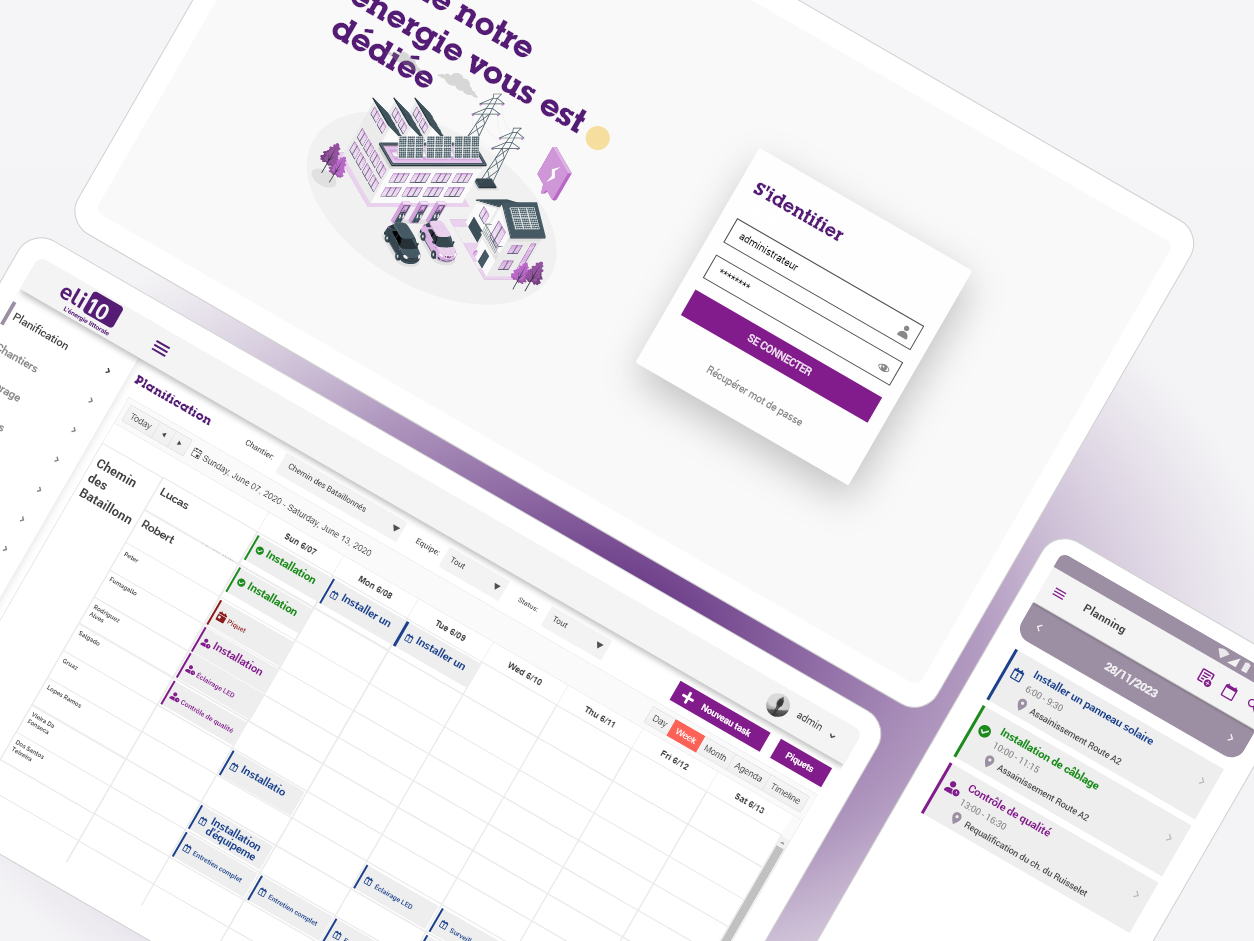
Cloud-based website and Android app to manage HR tasks
Eli10 helps HR teams manage schedules, attendance, and workforce operations across multiple locations. All in one platform.
🔒 For data privacy reasons, information on this project is limited.
Year2023
RoleProduct Designer
PlatformWeb · Android
ToolsFigma · Web
Overview
Project context
In this project, I designed the user experience for a human resources management software for a company in the energy sector. It was an enterprise-level HR management tool designed from scratch to support daily workforce operations. The platform includes a cloud-based web application and an Android app, enabling HR teams to manage schedules, attendance, and employee location data across distributed teams.
The new system covered employee management, payroll, vehicle control, holiday, attendance and pick-up of work materials.
The goal was to develop an intuitive user experience that would simplify these processes, optimise the administrator work and facilitate access to critical information in real time.
The result was a comprehensive digital platform that transformed operational management, significantly improving the efficiency and organisation of the company.
My role
My role in the project
My role involved overseeing the entire design process, from initial research to final implementation. Working with the client, I played a crucial role in enhancing existing experiences and designing new functionalities to add value for users and businesses.
This role required a level of autonomy, ownership, and collaboration with stakeholders despite the remote setup. Some key responsibilities:
Translating business and operational needs into user-centered solutions
Defining information architecture and core workflows
Designing the UI for both web and Android platforms
Collaborated with the dev team to develop and execute the development of the apps, improving its functionality and user experience.
Creating scalable patterns and components for future growth
Iterating on designs based on stakeholder feedback before development
Challenge
Problem identified
The team was operating on three processes on paper, which created inefficiencies and opportunities for error on a day-to-day basis:
— Employee hiring and termination process — Time management and vacation assignment — Task assignment and tracking — Tracking of work materials.
I worked closely with the team, gathering detailed information about their current processes and the challenges they faced in managing paper-based tasks. Through remote meetings and interviews, we identified pain points and opportunities for improvement.
I approached the project by first mapping core HR workflows and identifying repetitive tasks. This allowed me to prioritize clarity and efficiency in the interface.
Early wireframes focused on:
- Reducing cognitive load in schedule management
- Making data states and statuses immediately visible
- Ensuring consistency between web and mobile experiences
The design evolved iteratively, incorporating feedback from stakeholders and technical constraints.
After analysing all the insights, we came to the conclusion that they needed to cover the following functionalities:
📋
Employee management
Complete employee profiles and information tracking in a centralized system.
⏱️
Time management
Logging hours worked, tracking attendance, and managing overtime.
🗓️
Shift management
Creating, assigning and monitoring work shifts across multiple locations.
📊
Reporting & analytics
Generating reports on workforce activity and attendance patterns.
💰
Payroll integration
Connecting workforce data with salary payment orders and invoices.
📍
Multi-location support
Managing employees and operations across different offices.
All design decisions were validated through iterative reviews and refinements before handoff.
Users
Who uses Eii10
👔
Office HR staff
Responsible for managing workers and assigning tasks through the web platform.
👷
Field employees
Responsible for logging hours and completing tasks via the Android mobile app.
We proposed creating a cloud-based website for tasks related to office users.
For workers, we took into account their working conditions: on-site at construction sites, sometimes far from urban areas and without a stable connection. Considering this scenario, we proposed a mobile app that can work offline and synchronize in the background when there is a stable connection.
Design
Website design
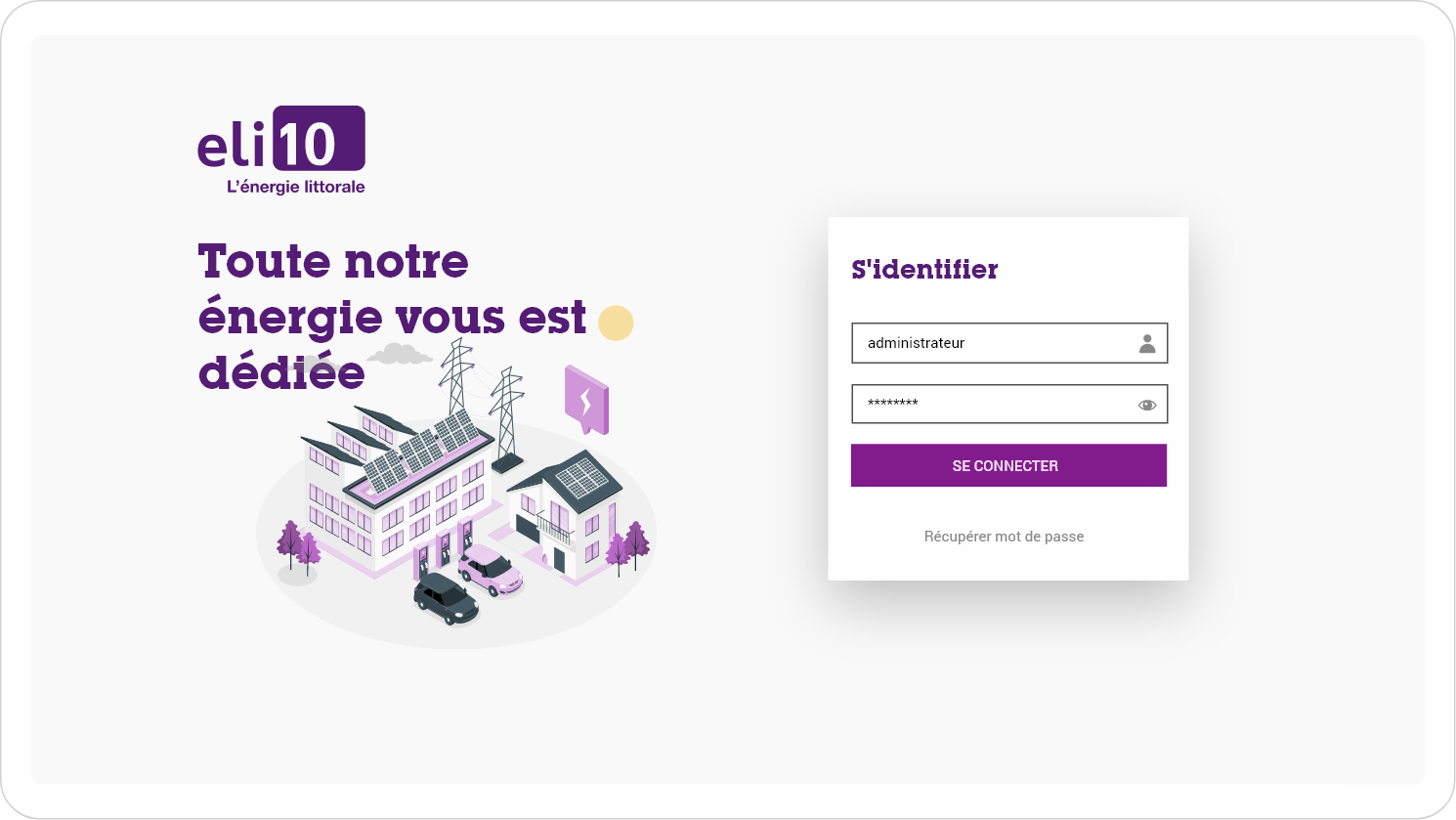
Login
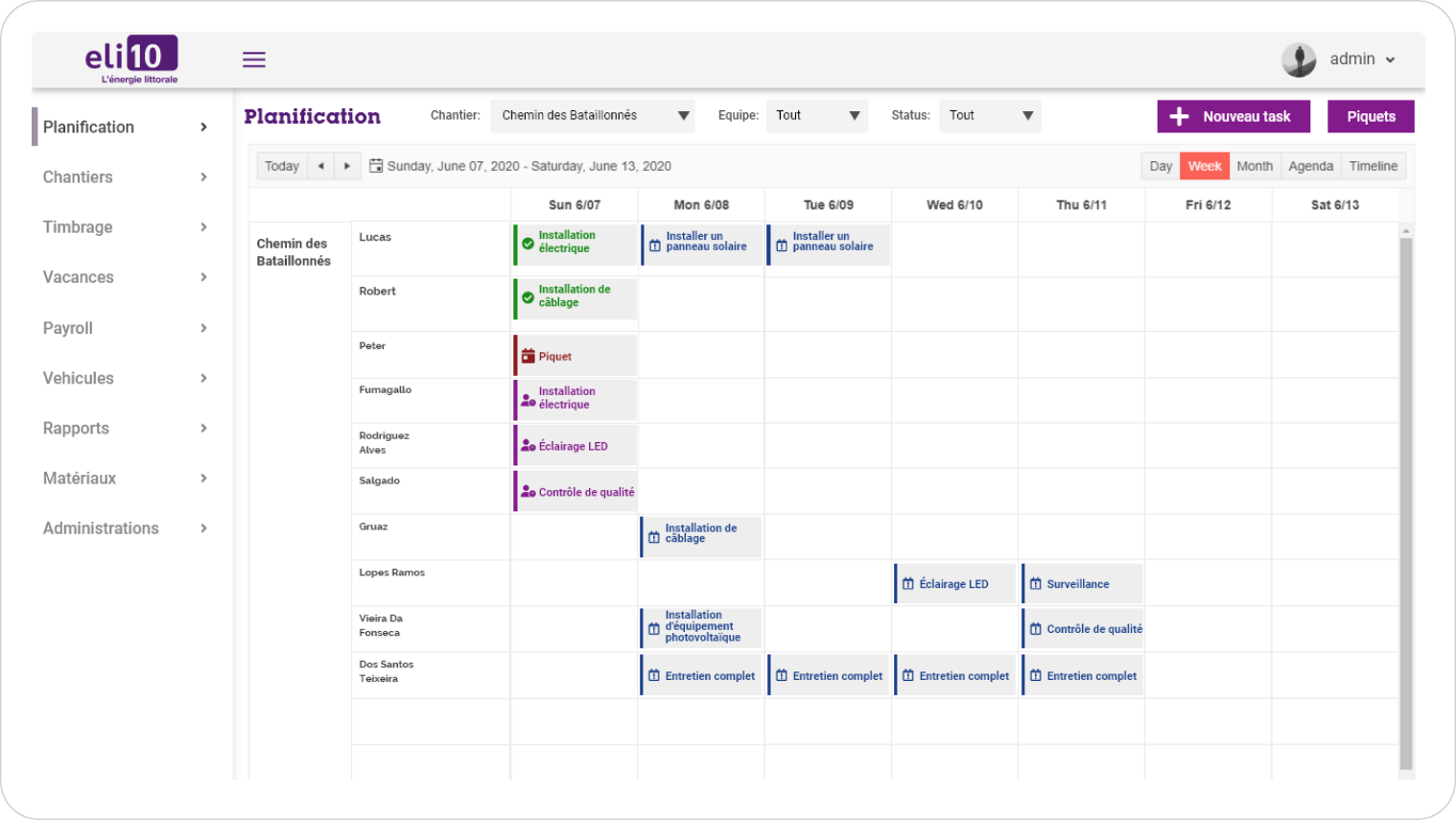
Task management planning - Calendar view was chosen to support rapid comparison across constructions and teams
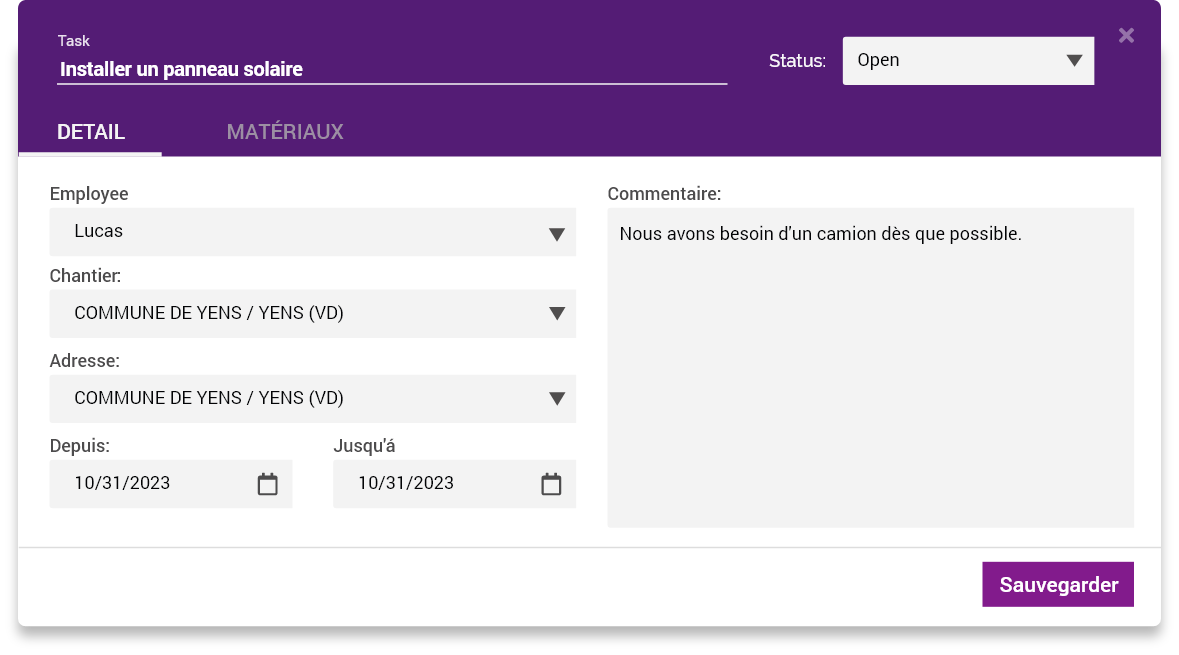
Create a new task
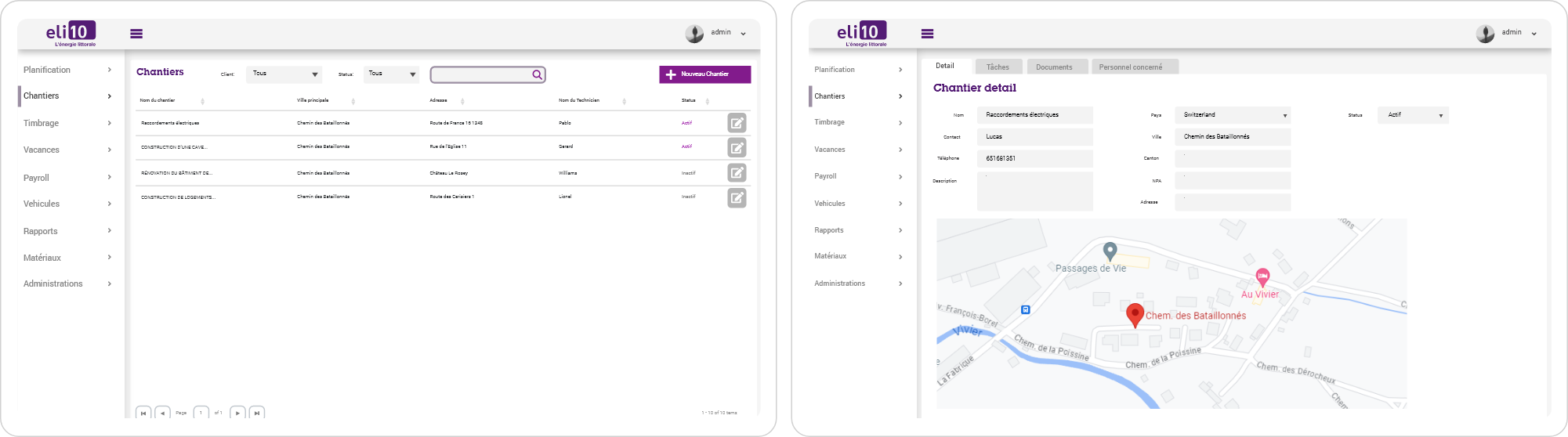
Construction managment and construction detail with location views that provided quick insight into workforce distribution
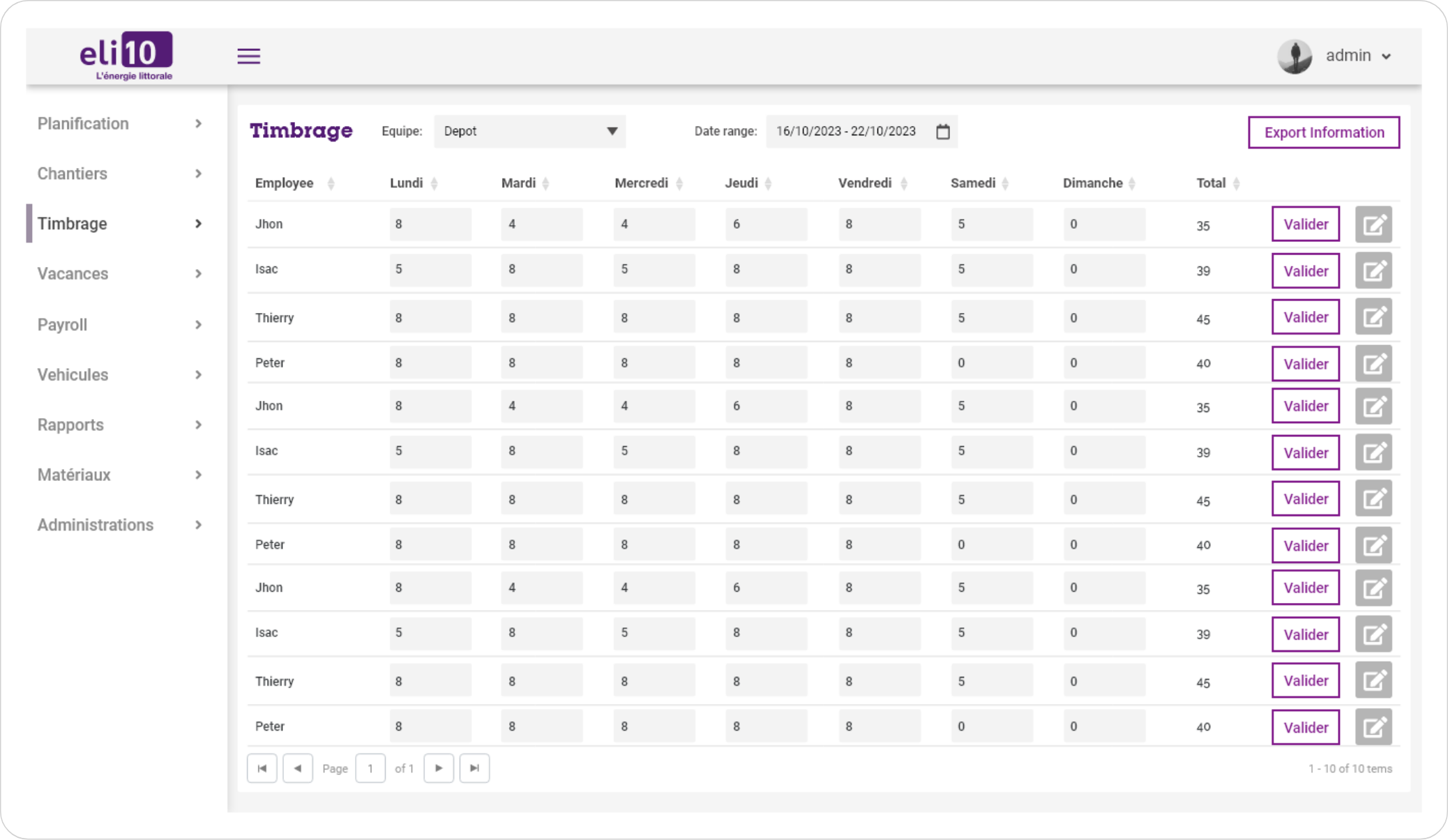
Work attendance
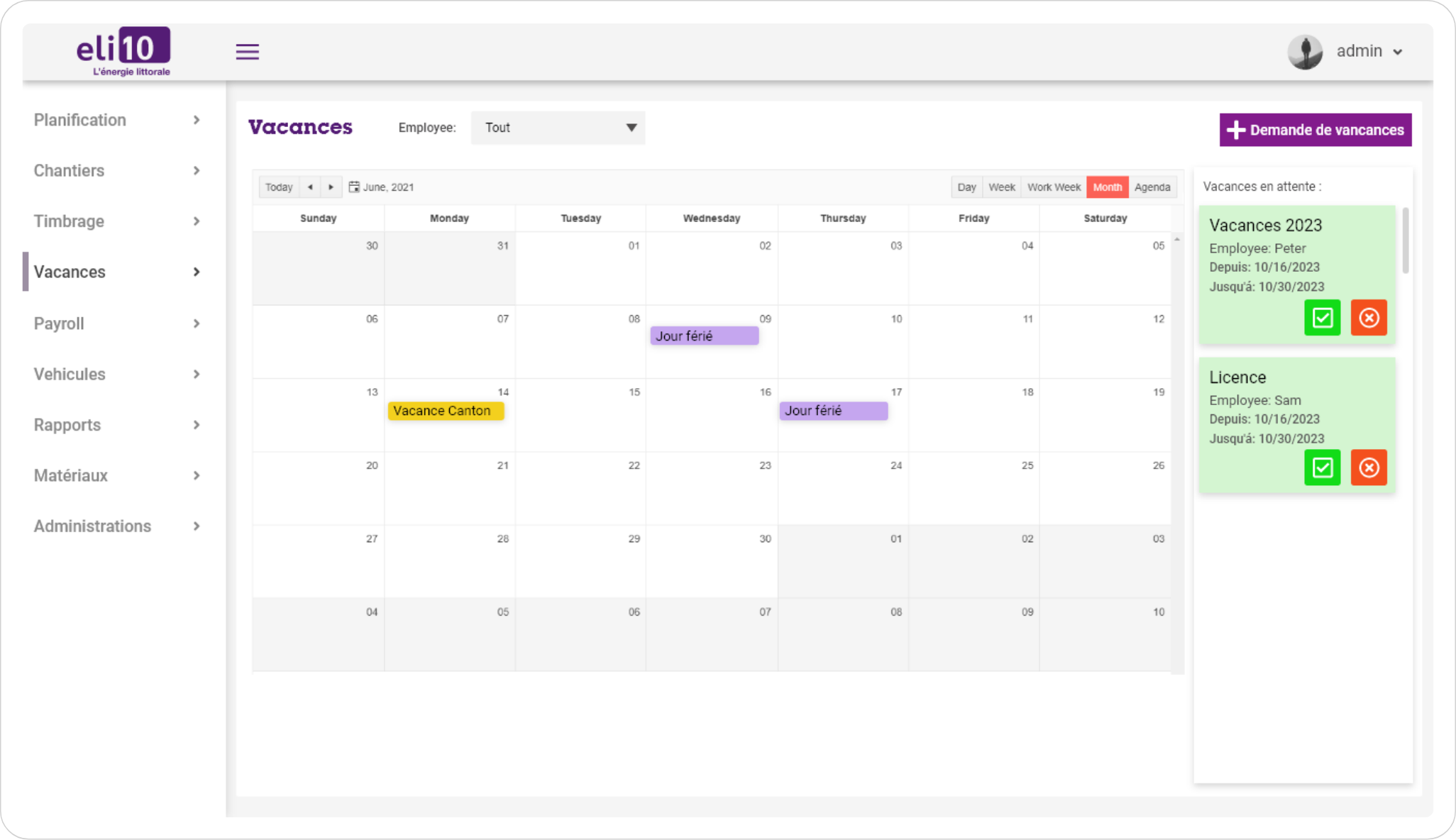
holidays
Mobile
Android app
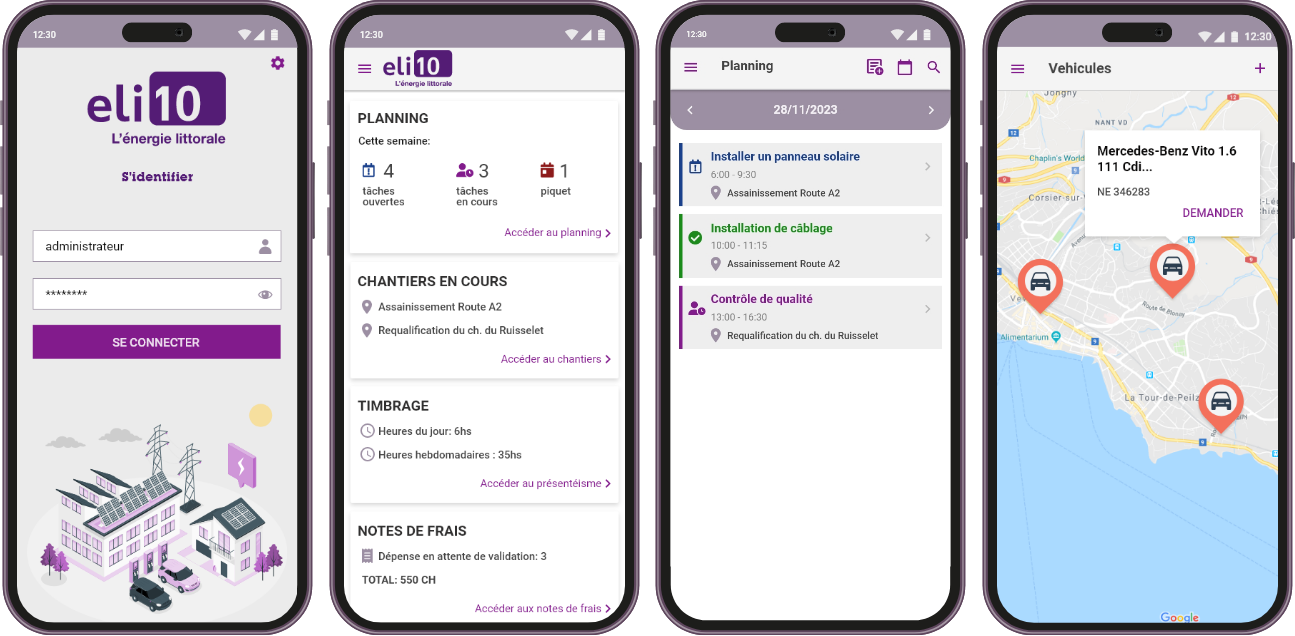
The mobile application was designed for construction site workers, allowing them to access necessary information directly on their phones.
This solution provides real-time access to important information, such as work material pickup and assigned tasks, which improves communication and productivity in the field.
Login
Results
Impact
The system was developed and implemented, becoming a key tool in the daily operations of the HR department. The team adopted it immediately, highlighting its ease of use, intuitive interface, and the agility it brought to processes.
Internal organization was improved, operational errors were reduced, and the time spent on administrative management was optimized, allowing the team to focus on higher-value strategic tasks.
The system was designed to scale alongside organizational growth, supporting future feature expansion without compromising usability./p>